


25 Years Later: How Dale Earnhardt’s Death Changed Racing Safety Forever

Twenty-five years ago, motorsport lost one of its most iconic figures at the 2001 Daytona 500. When Dale Earnhardt struck the wall in Turn 4 at Daytona 500, the sport was forced into a reckoning it had resisted for years. What followed win responses was a boost to the safety revolution after fatal crashes in many motorsports beforehand. This revolution reshaped NASCAR and helped many other major racing series safer.
Earnhardt’s death did not initiate motorsport safety awareness that shift had already begun after the tragic 1994 weekend at Imola that claimed Ayrton Senna and Roland Ratzenberger. But 2001 accelerated change across all motorsports.

The HANS Device: From Resistance To Mandate
A HANS device (head and neck support device) is a head restraint and a safety device. They reduce the likelihood of head or neck injuries, including basilar skull fracture (an injury that resulted in the deaths of Ayrton Senna, Dale Sr, Greg Moore and many others), in the event of a crash. The devices are now mass produced.
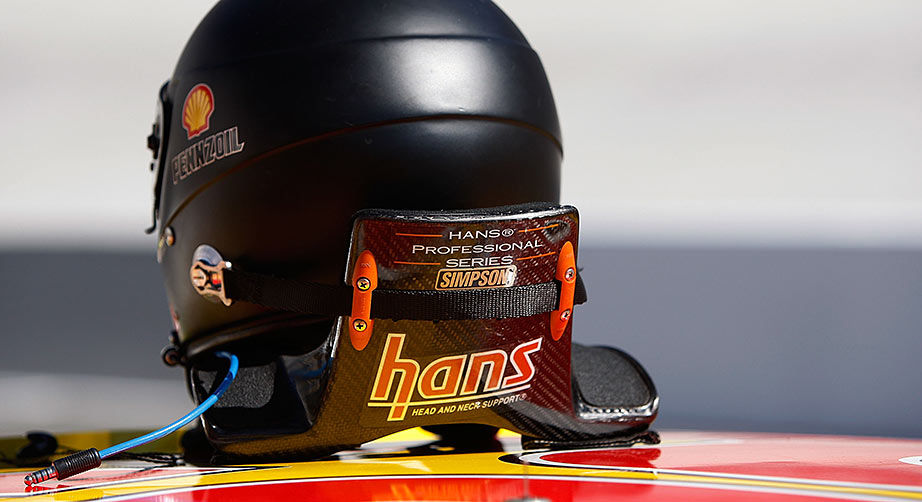
In October 2001, NASCAR mandated the use of the HANS and Hutchens device (a similar hybrid style device) in its top three national series. Before 2001 Earnhardt and other drivers had notably resisted wearing the HANS device, finding it restrictive and uncomfortable. There was still some resistance after Dale Sr's death with now Hall of Famer Mark Martin saying "I would not wear one for anything. I'll just keep my fingers crossed and take my chances".
At the time of his crash, head and neck restraints were available but not widely adopted. In the weeks after Daytona, HANS Performance Products sold more units than it had in the previous decade combined. What had once been optional became non-negotiable when it came to safety on the track.
The impact went far beyond NASCAR:
Formula One mandated HANS in 2003
Indy Racing League required it by 2006
NHRA introduced mandates soon after
IMSA required restraints in 2002

Today, head and neck restraints are standard in virtually every racing series worldwide.
SAFER Barriers And The Walls That Changed
Before 2001, many tracks still used exposed concrete walls. Earnhardt’s fatal impact essentially a near head-on collision after contact altered the car’s angle highlighted how violent deceleration loads could be even in crashes that did not appear catastrophic on television.
In response, NASCAR helped accelerate the development and installation of SAFER (Steel and Foam Energy Reduction) barriers at all tracks hosting its top divisions. R&D finished in 2002 and the new walls were installed at every major U.S track by 2005. These walls absorb and disperse energy rather than transferring it directly into the chassis.
Today, SAFER barriers are a standard at major oval facilities and can sometimes be seen in F1.
The Car Of Tomorrow And A Reinvented NASCAR Chassis
The most visible response was the development of NASCAR’s Car of Tomorrow (CoT), introduced in 2007. The new car looked a lot different and fans hated its boxier, taller, wider look. But NASCAR didn't care all they wanted was a car to prevent fans from having to see their heroes die in front of them.
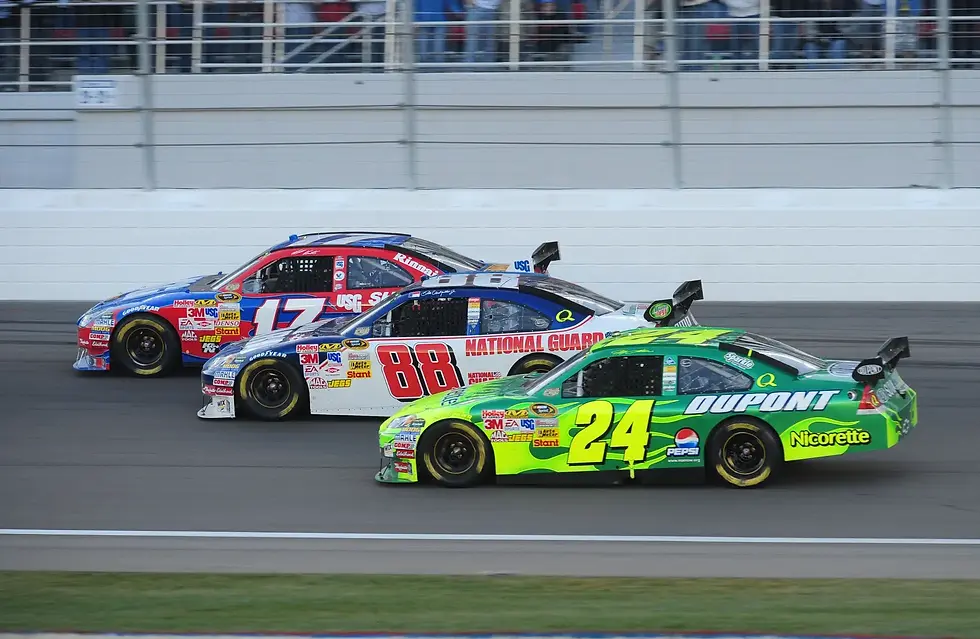
Key safety changes included:
Driver seat moved four inches toward the center of the car
Roll cage shifted rearward for improved impact geometry
Larger crumple zones and energy-absorbing foam in side structures
Stronger fuel cell construction with reduced capacity
Exhaust rerouted away from the driver
The philosophy shifted from building the fastest car possible to building a protective cocoon. That design lineage carried into the Gen 6 car in 2013 and continues in modern NASCAR platforms. One of the most cited examples of its effectiveness came during the 2020 Daytona 500, when Ryan Newman survived a violent last-lap crash that would have been almost unthinkable in earlier eras.

What Else Changed?
Post-2001 research led to reinforced high-back containment seats often informally called “Earnhardt-style” seats designed to limit lateral head movement. Five- and six-point harness standards were strengthened. Inspection protocols tightened. Energy-absorbing padding and cockpit geometry were refined to manage load transfer during sudden deceleration.
NASCAR also established a dedicated safety R&D center, allowing engineers to analyze crash data in depth using enhanced onboard recorders. The sport became proactive rather than reactive.
The Hard Truth 25 Years Later
When Dale's car decelerated by about 40 mph in milliseconds the future of motorsports changed. The sport had lost other drivers in the months before, but his death, on the sport’s biggest stage, forced action.
The questions asked in 2001 were painful but necessary: What failed? What could have been done? Why wasn’t it required sooner?
Earnhardt’s legacy is built on championships and intimidation. But 25 years later, another part of that legacy is quieter and arguably just as powerful:
A generation of drivers who get to walk away.


Comments