


I Went to Philadelphia Supercross. Here's How It Stacks Up Against NASCAR, IndyCar, and F1.

Motorsport fans tend to stick to only watching 1 or 2 Series. NASCAR fans watch NASCAR, F1 fans watch F1, etc. Supercross, despite being one of the most athletically demanding and visually spectacular forms of racing on the planet, often gets overlooked by fans of the mainstream series who have never made the trip out to a stadium event. After attending the 2026 Philadelphia Supercross, that oversight is hard to justify. Here is an honest breakdown of the experience for anyone who has never been, and how it compares to what you might already know from NASCAR, IndyCar, or Formula 1.

Supercross Tickets
Start with the most important number. A second deck ticket to Philadelphia Supercross cost around $40-50. That gets you into the building, for access to the FanFest it is about another $50. Parking if you decided not to take public transit is another $30. So for $130 you can get a full day of racing and time to meet many riders. The whole experience runs from noon until around 10 at night.
For context, a comparable NASCAR or IndyCar ticket at a major venue will typically run two to three times that amount before you factor in parking and any premium access. F1 is typically in a higher bracket depending on the circuit. Supercross is not trying to compete on that level, and that works heavily in its favor as an entry point for new fans.
There is also a well-known trick in the Supercross community worth mentioning: bringing an empty Monster Energy to the Fan Fest can get you a ticket through a recycling promotion.
FanFest Is the Closest Thing to a NASCAR Paddock Pass
The FanFest experience at Supercross is one of its strongest selling points and the closest comparison to what NASCAR fans know from the garage or hauler area.
At Philadelphia, fans had direct access to team haulers and riders for autograph sessions and up-close interaction in a way that feels genuinely personal. The atmosphere had a lot in common with a NASCAR pre-race experience.

Merch works in a different way also. Unlike NASCAR where individual teams have their own merchandise haulers, Supercross merchandise is sold exclusively through the Supercross store, either in the FanFest area or at various points inside the stadium. Whether you see that as a limitation or a convenience probably depends on what you are used to. This may be due to limited space or Feld wanting an income stream to have low expenses.
From what I saw autograph sessions did not require a purchase for access, way different from how certain NASCAR team appearances are tied to buying a diecast or other item. That is worth knowing ahead of time if meeting a specific rider is high on the priority list since lines can get long.
The Teams Are Nothing Like What You Expect
Spending time around the paddock area and talking to people inside it changes your understanding of how the sport actually works.
Tom, a hauler driver for Phoenix Racing Honda in the 250SX class, offered a perspective on the operation that most fans never get to see. Unlike the rotating crew setups you might find in some motorsport categories, Supercross teams run fixed crews that travel with the series across the country. Teams are based primarily in California. Tom said he has not been home since January. Other team members occasionally return home between rounds, but hauler drivers generally stay on the road for a full run of the season. It is a level of commitment that does not get talked about enough.

The bike side of things is also more nuanced than it looks from the stands. Each rider works from their own frame, built specifically for them, and suspension setups differ even between teammates on the same team. That level of individualization is notable in a sport where the rules are specifically structured to prevent factory teams from spending their way to dominance. The regulations create a more level playing field than you might expect, and teams that invest smartly in rider development and setup work can genuinely compete with larger operations.
For comparison, a NASCAR driver I spoke with over the weekend noted that on their side, chassis are sometimes shared between drivers depending on the situation, and driver-specific comfort items are built in where needed, but the performance side of the chassis is not tailored to a specific driver in the same way.
The Sport Is 80 Percent Rider
One of the most valuable conversations at Philadelphia came from spending time with the NBC broadcast team, which included Justin Brayton, Justin Thomas, and Adam Cianciarulo, all former professional racers who now break down the sport for a national audience.

The point that stuck: Supercross is 80 percent rider and 20 percent bike.
That ratio flips the perception that casual fans often bring to the sport. The assumption is that better equipment equals better results. In Supercross, the equipment gap between factory and privateer teams exists but is narrowed intentionally by the rules, and the difference between a rider who wins and a rider who finishes tenth is almost always about technique, fitness, and track work done in the off-season. Most of the meaningful gains riders make happen before the season starts, through constant repetition of section work on practice tracks. By the time the gate drops, the physical and technical preparation is largely locked in.
I remember Adam telling me that a guy like Hunter Lawrence can take a 450 off a store shelf and run top 10.
The Racing Itself Delivers
Philadelphia was a muddy mess and it still worked. Rain hit the venue and the track conditions deteriorated through the day, but the fans showed up anyway. Ponchos filled the lower bowl. People who arrived when the doors opened at noon were still in their seats when the 450 main event finished around 10 at night.
The races themselves move fast. The 450 main event runs 20 minutes plus one lap, the 250 is 15 minutes plus one lap, which sounds short but they are really intense from start to finish. The track maintenance windows between motos run about 10 to 15 minutes, which keeps things moving without feeling rushed. The full evening never dragged.
Parking and concessions were expensive, but that is almost certainly a function of the venue and city rather than anything Supercross controls. Lincoln Financial Field and the surrounding area set their own prices. That is a cost of doing business in a major market and not unique to this sport.
Who Is Actually in the Stands
The Supercross fanbase is niche, and they know it. What stands out at a live event is how dedicated that fanbase is. These are not casual fans who showed up because it was the thing to do on a Saturday. The people in those seats know the riders, know the teams, know the series history, and care deeply about the outcome. The energy in a stadium when a main event gate drops is legitimate.
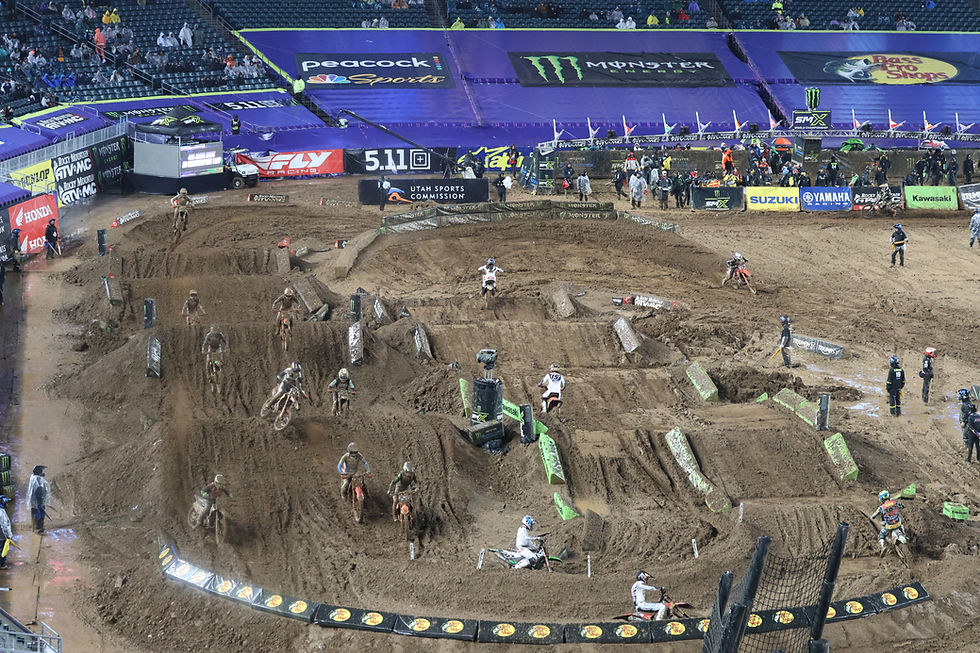
The question worth asking is what this sport could look like with a different promotional model behind it. Feld Entertainment runs Supercross as a single unified entity, which gives it consistency and control but also shapes the ceiling of its growth. What happens if a NASCAR-style ownership group or a Liberty Media-type operator gets involved at some point? The infrastructure is already there. The access and value proposition for fans is genuinely strong. The racing product is excellent. The gap between where Supercross is and where it could be feels like more of a visibility problem than a product problem. For example my friends who live in downtown Philadelphia had no idea the series was coming so that may be leaving out new fans. I still believe Feld is doing a great job running things but would be cool to open up a bit more.
For anyone who has been on the fence about attending, Philadelphia made the case clearly. A full day of great racing, and a paddock experience that most mainstream series cannot match at that $130 price point. It is worth the trip.
Fyi RCAP attended the 2026 Philadelphia Supercross as credentialed media. So some access we had may not be available with certain ticket packages.


Comments